Table of Contents
ToggleGreen is making a strong comeback on residential exteriors, and for good reason. Unlike trendy colors that feel dated within a few years, green exterior paint colors offer timeless appeal while connecting your home to its natural surroundings. Whether you’re drawn to soft sage tones or bold forest hues, selecting the best green exterior paint colors requires understanding how shade, undertone, and lighting affect your home’s curb appeal. This guide walks you through the science and strategy behind choosing green, so you end up with a color that complements your home’s architecture, suits your climate, and won’t leave you repainting in five years.
Key Takeaways
- Green exterior paint colors offer timeless appeal and blend naturally with landscaping, making them a sophisticated choice across multiple architectural styles that won’t feel dated in a few years.
- The best green exterior paint colors for your home depend on climate, lighting conditions, and architectural style—soft greens work for cottages and farmhouses while deep forest greens suit larger homes and traditional designs.
- Always test green exterior paint colors on your home in multiple lighting conditions (morning, midday, evening) for several days before committing, as undertones and light reflectance values significantly affect final appearance.
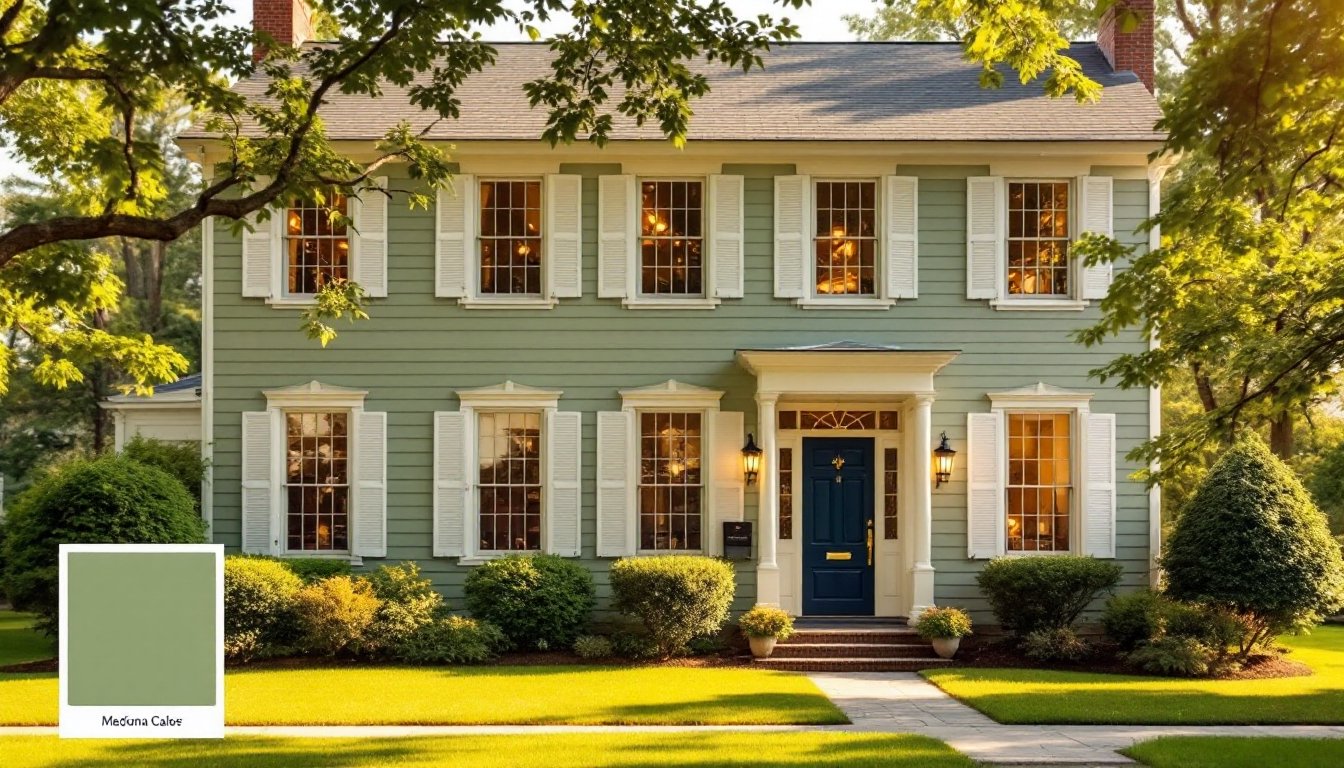
- Pair your chosen green with complementary trim and accents—white or cream trim brightens soft greens, while navy or black doors add definition and prevent visual clutter from mismatched colors.
- Deeper greens (LRV 20–40) hide dirt and mildew better than light colors, making them ideal for humid climates, though lighter greens (LRV 50–70) offer better visibility of architectural details on smaller homes.
Why Green Is a Smart Exterior Paint Choice
Green works on exteriors because it’s inherently forgiving. It blends visually with landscaping, making even modest yards feel cohesive. Unlike bold reds or blues that demand careful trim coordination, green reads as sophisticated across multiple architectural styles, from colonial and farmhouse to modern minimalist.
From a practical standpoint, green hides dirt and mildew better than light colors. If you live in a humid climate or have mature trees overhead, a medium-to-deeper green holds up visibly longer between cleanings. Light taupes and whites, by contrast, show every water stain and algae streak.
Thermally, darker greens absorb slightly more heat, which matters in cold climates where you want solar gain on walls. In hot, sunny regions, lighter greens reflect more heat, reducing cooling load. This isn’t a dealbreaker, modern exterior paints have reflectivity ratings (measured by Solar Reflectance Value, or SRV) regardless of color, but it’s worth factoring in.
Popular Green Exterior Paint Shades and Their Characteristics
Sage Green and Soft Greens
Sage and soft greens sit at the lighter end of the spectrum and read as calming and welcoming. These colors work beautifully on Cape Cod cottages, farmhouses, and transitional homes. Sage leans slightly gray or dusty, which softens its appearance and prevents it from feeling too yellow or bright.
When shopping for soft greens, check the paint chip in full sunlight, dappled shade, and under your porch light. Colors with high undertones of gray or taupe will shift warmer under incandescent bulbs, while those with blue undertones may feel cooler at night. Popular soft green options like Sherwin-Williams Rainwashed and Benjamin Moore HC-142 (Healing Aloe) pair well with white or cream trim. These shades typically have an LRV (Light Reflectance Value) between 50–70, meaning they’re visible enough to showcase architectural detail without overwhelming smaller homes.
Deep Forest and Hunter Greens
Deep greens command presence and work particularly well on larger homes or those with strong architectural bones. Hunter and forest greens read as elegant and moody, especially on traditional or colonial-style homes. Because they’re darker (LRV typically 20–40), they absorb light and can make a small cottage feel smaller, so consider scale carefully.
Deep greens like Sherwin-Williams Urbane Green and Benjamin Moore HC-133 (Darkroom Green) pair gorgeously with warm brass or gold hardware and crisp white trim. They hide imperfections well and age gracefully, unlike trendy paint colors, a forest green doesn’t suddenly feel dated. One caveat: darker greens can be harder to touch up later, as even slight variations in sheen or application create visible patches. Use the same paint batch and application technique for any future touch-ups, and store leftover paint properly in airtight containers.
How to Select the Right Green for Your Home’s Architecture and Climate
Start by photographing your home in morning, midday, and evening light. Note the color of your roof, foundation, and any existing stone or brick. Green interacts differently depending on these surrounding colors. A blue-undertone green can clash visually with red brick, while a warmer, more olive-leaning green harmonizes beautifully.
Consider your regional climate. In the Pacific Northwest or Northeast with frequent cloud cover, slightly warmer or more yellow-tinted greens prevent the exterior from feeling too cool or flat. In sun-heavy regions like the Southwest, cooler greens with blue undertones can feel fresher and less muddy. Humidity also matters: in wet climates, medium-to-deep greens resist visible algae growth better than pale pastels.
Architecturally, match the green’s saturation to your home’s era. Historic homes and period renovations suit more muted, authentic greens (think colonial-era paints with less pigment and slight earthy shifts). Modern homes can carry brighter, more saturated greens. If you’re unsure, order paint samples in 2–3 candidates, apply a 3-by-3-foot section on different exterior elevations, and live with them for several days under various lighting conditions. This simple step prevents expensive mistakes.
Pairing Green Exteriors With Complementary Accents and Trim
Your green’s success hinges on trim and accent colors. White or cream trim is the safest choice and visually brightens soft greens while making deep greens pop. For a bolder look, consider warm grays or warm whites (those with slight yellow or taupe undertones) alongside sage greens, they feel cohesive rather than jarring.
Door color deserves attention. Navy, deep charcoal, or true black doors look stunning on lighter greens and add definition. On deep forest greens, a natural wood stain or warm bronze finish feels less heavy. Avoid pairing greens with warm orange or rust-toned doors unless you’re deliberately going earthy and rustic.
Roof color should already be fixed when you’re choosing siding, but confirm the green and roof don’t fight. Dark green siding with a dark gray or black roof reads as sophisticated. Light green with a brown or weathered wood roof suggests a craftsman or cottage aesthetic. If you’re replacing the roof simultaneously, coordinate these decisions with your contractor before finalizing either color.
Accent details, shutters, soffit, fascia, matter too. Keeping these white or a neutral tone prevents visual chaos. But, you can experiment with a front door in a complementary color. Resources like Home Bunch’s exterior paint color showcase and design guides from House Beautiful offer real-world examples of successful green exterior pairings. Also, Sunset’s regional design philosophy provides climate-appropriate color inspiration if you’re in the Western US.
Conclusion
Choosing a green exterior paint color is a satisfying decision when approached methodically. Test samples in real light, respect your home’s architecture and local climate, and pair your green thoughtfully with trim and accents. Green exterior paint colors work because they’re timeless, forgiving, and deeply connected to how we perceive home and nature. Take your time, and you’ll have a curb appeal you genuinely love for years to come.