Table of Contents
ToggleYour car’s carpets take a beating. Dirt tracked in from shoes, spilled coffee, mud from rainy days, it all settles into the fibers and stays there. A good car carpet cleaner is one of the most practical investments a car owner can make, turning dingy, stained carpets back into something you’d actually want your family sitting on. Whether you’re dealing with a fresh stain or months of accumulated grime, the right cleaner paired with some elbow grease makes a real difference. This guide walks you through the best options available right now and shows you exactly how to tackle the job yourself without professional help.
Key Takeaways
- A good car carpet cleaner paired with regular maintenance prevents permanent stains, odors, and protects your vehicle’s resale value.
- Portable spot cleaners with extraction power work best for deep stains, while enzymatic foams and sprays are ideal for light to moderate soiling and odor elimination.
- Thorough vacuuming before cleaning, testing products on hidden areas first, and allowing proper drying time are essential steps that determine cleaning success.
- Choose between mechanical cleaners ($100–$300) or budget-friendly enzymatic treatments ($10–$30) based on your vehicle’s usage patterns and carpet material sensitivity.
- Enzymatic products work at a molecular level to break down organic stains and odors, making them gentler on synthetic carpet fibers than abrasive scrubbing.
- Fresh spill cleanup followed by consistent spot cleaning prevents dirt from settling into fibers and saves you from expensive professional detailing later.
Why Car Carpet Maintenance Matters
Car carpets are constantly exposed to moisture, dirt, and stains that break down fibers over time. Unlike home carpets that sit in a controlled climate, vehicle interiors experience temperature swings, humidity from wet shoes, and the occasional spill that doesn’t get cleaned immediately. Neglecting this maintenance doesn’t just affect appearance, it affects resale value. Prospective buyers notice stained, musty interiors right away, and deep odors are tough to explain away.
Regular cleaning keeps carpets looking fresher longer and prevents permanent discoloration. Spot cleaning right after a spill stops stains from setting, while periodic deep cleaning removes embedded dirt and odors that surface cleaning misses. Getting on top of this now saves you from expensive professional detailing later or, worse, having to replace sections of carpet altogether.
Top Carpet Cleaning Methods You Can Do Yourself
Several proven methods work well for car carpets, and most are accessible to DIYers. The right choice depends on what you’re cleaning, fresh spills versus old stains, light dust versus ground-in dirt, and your budget. Here’s what actually works.
Portable Spot Cleaners
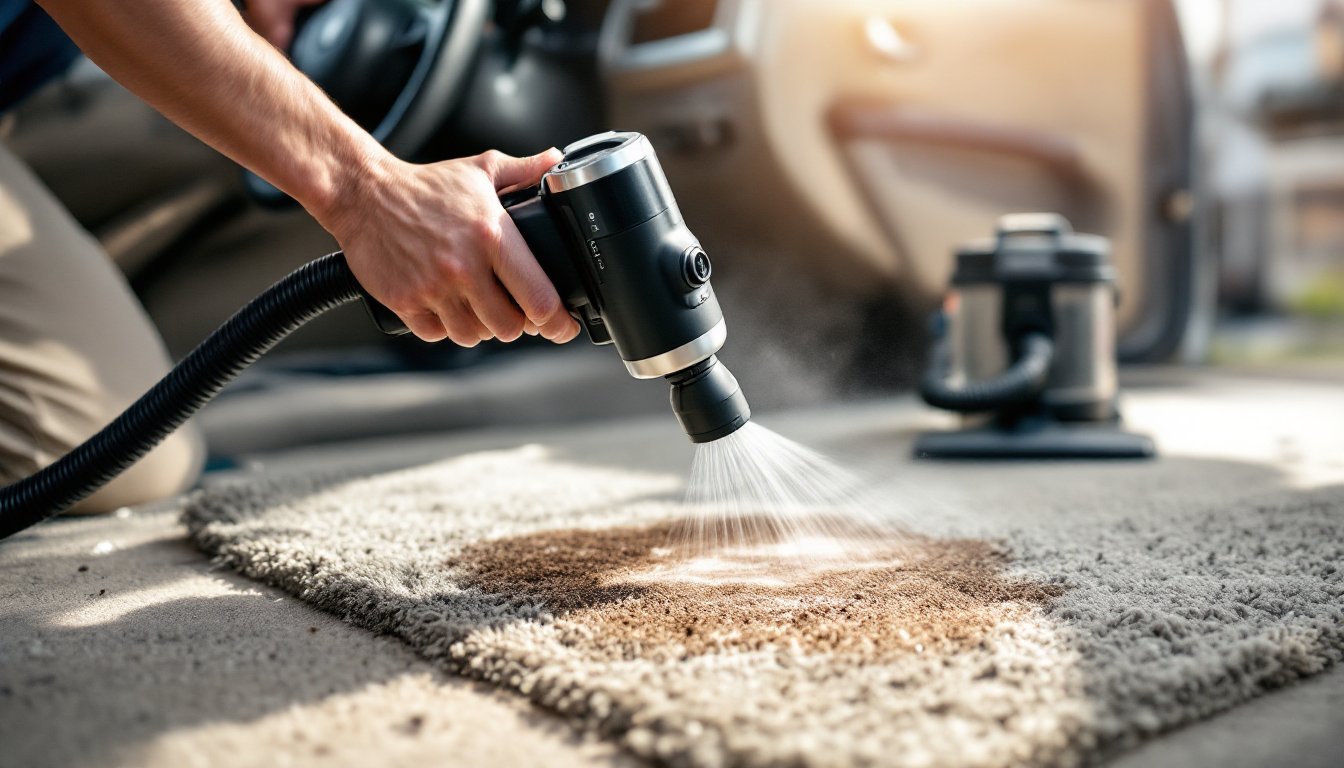
Portable carpet cleaners (sometimes called hand-carry or cordless models) are designed for small spaces like car interiors. These machines use a combination of water, cleaning solution, and suction to extract dirt and stains. The best carpet cleaner for cars in this category is compact enough to fit in a trunk and powerful enough to handle heavy stains. Models with heated water tanks perform better on greasy or oil-based stains, while simpler cordless options work fine for dust and light spillage.
What makes these effective is the extraction power, they literally pull moisture and dissolved dirt out of the carpet rather than just rubbing it around. If you’re doing regular maintenance cleaning, a cordless handheld model keeps things simple. For serious stains or deeper cleaning jobs, a small plug-in machine with a water tank justifies the cost. Look for models with adjustable brush settings so you don’t damage delicate carpets, and check that replacement pads or brush heads are readily available.
Enzymatic Foam and Sprays
Enzymatic cleaners work differently. Instead of machines, these are chemical solutions you spray on, let sit, and then vacuum or wipe away. Enzymes break down organic matter, dirt, food particles, pet accidents, at a molecular level. They’re gentler on carpet fibers than abrasive mechanical scrubbing and excellent for freshening up between deeper cleanings.
These work best on fresh or moderately soiled areas. Spray generously, let it sit for 10–15 minutes so the enzymes can do their job, then vacuum thoroughly or use a damp cloth to extract the loosened dirt. A good carpet cleaner for cars in foam form often includes a brush applicator, making it easier to work the product into the carpet without oversaturating it. Enzymatic products also tend to tackle odors better than mechanical cleaning alone because they eliminate the source rather than just masking it.
How to Choose the Right Cleaner for Your Needs
Think about what you’re cleaning most often. Do you spill coffee weekly? That’s different from dealing with mud tracked in once a season. Heavy daily use calls for a reliable portable spot cleaner you can grab quickly. Light, occasional stains? Enzymatic foams and sprays save you from storing large equipment.
Also consider your vehicle’s carpet material. Modern cars often have synthetic blends that hold color well but can be sensitive to harsh chemicals. Older vehicles might have more traditional nylon carpets that tolerate stronger cleaners. Check your owner’s manual or test any new product on a hidden corner first, usually under the rear seat or in a closet, before treating visible areas.
Budget matters too. Portable cleaners range from $100 for basic cordless models to $300+ for heated tanks and dual-tank systems. Enzymatic products cost $10–30 per bottle and last longer because you use small amounts each time. If you own multiple cars or have kids and pets, a portable cleaner pays for itself within a year. If you drive solo and keep things tidy, enzymatic treatments plus regular vacuuming might be all you need. Testing products on inconspicuous spots first prevents expensive mistakes, and reading reviews from other car owners highlights which models hold up to regular use versus which ones clog or lose suction quickly.
Step-by-Step DIY Car Carpet Cleaning Guide
Prep work makes or breaks the results. Start by removing everything loose, floor mats, trash, items wedged under seats. Vacuum thoroughly, getting into crevices and under the seats where dirt collects. Use a crevice attachment to reach tight spots along seams and under the dashboard. This step matters because loose dirt will muddy your cleaning solution and make the machine or chemical work harder.
For portable spot cleaners:
- Fill the water tank with the manufacturer’s recommended mix of hot water and cleaning solution (typically one part solution to two parts water, follow the label).
- Plug in the cleaner or charge the battery fully. Heat matters: hot water dissolves stains faster than cold.
- Test on an inconspicuous area first. Run the brush gently over the spot and check for color bleeding or damage.
- Start with light, overlapping passes over stained areas. Don’t oversaturate: let the machine extract moisture as you go.
- Make a second pass going perpendicular to the first to ensure even coverage.
- Empty the dirty water tank as needed and refill the clean water tank. Dirty tanks reduce effectiveness.
- Do a final pass with just water (no solution) to rinse residue, which helps prevent re-soiling from leftover chemicals.
- Leave doors open for 20–30 minutes to air dry, or run the heater on low to speed drying.
For enzymatic foams and sprays:
- Shake the bottle well: enzymes settle during storage.
- Spray evenly over the stained or soiled area until damp but not soaked. A little goes a long way.
- Let it sit for 10–15 minutes. Set a timer so you don’t forget it’s working.
- Agitate gently with a soft brush if stubborn dirt remains, working from the edges of the stain inward to prevent spreading.
- Vacuum thoroughly, or dampen a clean cloth and blot to extract the loosened dirt and solution.
- If residue remains, dampen a cloth with plain water and dab the spot to rinse, then vacuum again.
- Allow to air dry completely before using the vehicle.
One resource that thoroughly tests cleaners is available through Good Housekeeping’s review of car upholstery cleaners, which evaluates stain removal and ease of use across real-world scenarios. For general home cleaning strategies and quick tips, Real Simple’s approach to organization applies to vehicle maintenance too. Also, The Spruce’s home care guides include applicable cleaning methodologies that work in confined spaces.
For stubborn odors, place an open box of baking soda in the car overnight after cleaning. It absorbs lingering smells without chemicals. Activated charcoal works similarly if you prefer a commercial product. If the smell persists after cleaning, moisture may be trapped in the underlying padding, roll down windows and park in the sun for several hours to dry everything completely.
Conclusion
Clean car carpets improve your driving experience and protect your vehicle’s value. Whether you choose a portable machine or enzymatic treatments depends on your schedule and how often you deal with stains, but both approaches deliver real results when done correctly. Start with thorough vacuuming, pick the method that fits your needs, and stay consistent with spot cleaning after spills. Your car’s interior will look and smell noticeably fresher.