Table of Contents
ToggleA sleeper sofa bridges the gap between everyday seating and guest accommodation, and when it’s a Serta sleeper sofa, you’re getting a piece designed with both comfort and durability in mind. Whether you’re furnishing a studio apartment, setting up a home office with flex space, or simply want a multifunctional addition to your living room, a sleeper sofa queen or other size can save square footage while pulling its weight. This guide walks you through what makes Serta sleeper sofas tick, how to pick the right one for your space, and how to keep it in top shape for years of reliable use.
Key Takeaways
- A Serta sleeper sofa combines comfort and durability through reinforced hardwood frames, ball-bearing rollers, and quality mattresses that handle repeated opening and closing without wear.
- Measure your doorway, hallway, and extended depth before purchasing—a queen-size sleeper sofa requires roughly 60 inches of depth when open, so size verification prevents delivery and setup headaches.
- Quality matters: a reliable Serta sleeper sofa under $1,500 saves money compared to cheaper alternatives that compromise on frame durability, while upholstery choice (leather, microfiber, or linen) should match your household traffic and cleaning habits.
- Proper setup includes leaving 24–36 inches of clearance in front, adding a 2–3 inch mattress topper for guest comfort, and treating the sofa as furniture rather than a trampoline to prevent premature wear.
- Monthly cushion rotation, immediate spill blotting, bi-annual bolt tightening, and occasional air circulation in humid climates extend your sleeper sofa’s lifespan to 10+ years with minimal maintenance.
What Is a Serta Sleeper Sofa and Why Choose One
A sleeper sofa is a couch that converts into a bed, typically via a pull-out frame, a fold-down backrest, or an ottoman lift mechanism. Serta, a mattress and furniture company with over a century of experience, applies the same engineering rigor to its sleeper sofas that it does to its standalone mattresses.
Why go with a Serta sleeper sofa instead of a standard couch or an air mattress? The main draw is structural integrity. Serta sleepers use reinforced frames, tested mechanisms, and quality upholstery that hold up to repeated opening and closing. You’re not fighting a flimsy mechanism or thin cushioning that flattens after a few months. For renters or homeowners short on space, especially those considering a queen-size model like a Serta sleeper sofa queen, the investment pays off in convenience and longevity.
They’re also less awkward than hosting guests on an air mattress (which deflates at 2 a.m.) or a futon that feels more like a prop than furniture. A quality sleeper sofa, when properly chosen and maintained, becomes a genuine seating-plus-sleeping solution.
Key Features That Make Serta Sleeper Sofas Stand Out
Serta sleeper sofas aren’t all identical. Here are the standout qualities that separate reliable units from budget knockoffs:
Frame Construction
Serta uses hardwood or engineered wood frames, not particleboard. The joinery is glued and screwed, not stapled. This matters because repeated opening and closing stresses the joints: a solid frame handles that wear without wobbling or creaking after six months.
Mattress Type
Most Serta sleepers come with an innerspring or high-density foam mattress. Innerspring units are firmer and tend to last longer, while foam offers a softer feel and better motion isolation (useful if guests sleep lightly). Neither is objectively “better”, it depends on your guests’ preferences and your space constraints.
Mechanism
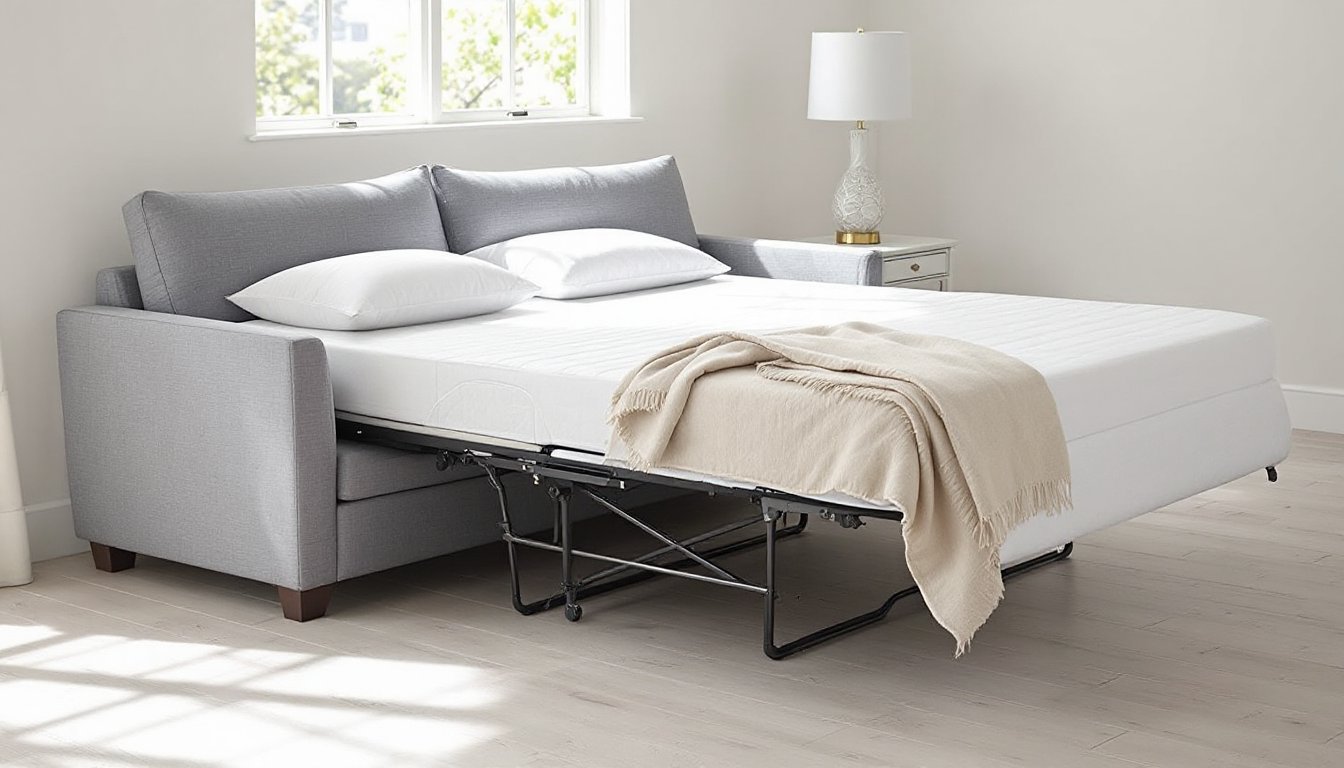
The pull-out frame is the most common system. You pull the frame toward you, and it unfolds smoothly. Serta designs these with ball-bearing rollers so they don’t stick or bind midway, a real annoyance with cheaper sofas.
Comfort and Support Systems
Comfort isn’t a guess with Serta sleeper sofas. The brand uses multiple layers: a supportive base, cushioning (usually with wrapped coils or foam), and upholstery that balances softness with durability. When sitting, you get a couch experience: when the frame is extended, the mattress provides sleep-ready support. The goal is that guests don’t feel like they’re sleeping on “the couch bed”, they feel like they’re on an actual bed.
How to Select the Right Size and Style for Your Space
Choosing a sleeper sofa requires three measurements: the room width, the depth it’ll occupy when open, and what sleeping configuration suits your guests.
Measure Twice
First, measure your doorway, hallway, and any tight corners the sofa must navigate during delivery. A queen-size sleeper sofa, roughly 80–90 inches wide, may not fit through a standard apartment corridor. Then, measure the footprint when fully extended. A typical queen sleeper bed requires about 60 inches of depth when open. If your guest room or living area doesn’t accommodate that, a full-size sleeper (72 inches wide, ~54 inches when open) or even a twin might be the practical choice.
Style and Upholstery
Serta sleeper sofas come in leather, microfiber, linen blends, and traditional upholstery. Leather looks elegant and cleans easily but can feel cold and show fingerprints. Microfiber resists stains well and feels cozy but can wear shiny with heavy use. Linen is breathable and looks refined but stains more easily. Consider your household traffic and pet situation.
Color and Room Fit
Neutral tones (gray, beige, brown) work in any decor. If you want design ideas that blend function with style, darker colors hide wear but can feel heavy in small rooms. Light colors brighten a space but show every spill. Be realistic about your cleaning habits before committing.
Budget Reality
Serta sleeper sofas range from roughly $1,000 to $3,000 depending on size, materials, and mechanism. A quality unit under $1,500 is reasonable: below $800, you’re likely compromising on frame durability or mattress quality.
Setting Up and Using Your Sleeper Sofa Effectively
Delivery and setup are where many homeowners stumble. When your Serta sleeper sofa arrives, inspect it immediately for damage. Open it and close it several times before your guests arrive, familiarize yourself with the mechanism so you’re not fumbling through the demo in front of company.
Placement and Clearance
Position the sofa where it can extend fully. Don’t jam it into a corner expecting the pull-out to work smoothly. Leave at least 24–36 inches of clearance in front, depending on the mechanism. Check that the frame slides smoothly without hitting walls or furniture.
Bedding and Comfort
A sleeper sofa mattress isn’t as thick as a standalone mattress, so a quality mattress pad or topper (2–3 inches of memory foam or gel-infused) makes a real difference. Top it with fitted sheets designed for the mattress thickness, regular pillows, and a lightweight blanket. Guests shouldn’t feel like they’re sleeping on a “couch”: good bedding bridges that gap.
Guest Prep
If hosting longer than a weekend, rotate a fan in the room or crack a window to prevent moisture buildup in the mattress. Remind guests to use the armrests and cushions to sit, not to bounce or put feet on the back. Treat it like furniture, not a trampoline.
Troubleshooting
If the frame sticks, check for debris under the rollers. A light vacuum and spot-check usually fix it. If the mattress feels soft or lumpy after a year or so, it’s likely settling normally, a topper often restores the feel without replacement.
Care and Maintenance Tips to Extend Your Sofa’s Lifespan
A Serta sleeper sofa is durable, but it benefits from routine care. Neglect, and you’ll wear it out faster than intended.
Weekly Habits
Fluff and rotate cushions weekly if possible. Close the mechanism fully when not in use, leaving it partially extended stresses the frame and rollers. Vacuum the seams and under cushions monthly to prevent dust and crumb buildup, which can degrade stuffing over time.
Spill and Stain Management
Blot spills immediately with a dry cloth. Don’t rub, that drives the liquid deeper. For light stains, a damp cloth with mild soap works: for tougher spots on microfiber or leather, use a fabric-specific cleaner. Check the manufacturer’s care tag first. Avoid harsh chemicals or steam cleaners unless the upholstery explicitly allows it.
Seasonal Care
In humid climates, occasional air circulation prevents mildew in the mattress cavity. Open it once a month for an hour or so. In dry climates, no special humidity management is usually needed. Protect from direct sunlight with curtains or a throw blanket, UV exposure fades fabric and degrades cushioning faster.
Frame and Mechanism
Every six months, check that bolts and brackets are tight (they can loosen with regular use). If you notice squeaks, apply a silicone-based lubricant to joints, not oil, which attracts dust. For pull-out mechanisms, clean the rollers and track with a dry brush to ensure smooth operation. Practical homeowner guides often emphasize preventive maintenance, and sleeper sofas are no exception.
Conclusion
A Serta sleeper sofa is a practical investment if you have the space and need guest accommodation without sacrificing daily living comfort. The key is choosing the right size, understanding the mechanism, and committing to basic maintenance. With those elements in place, you’re looking at a 10+ year lifespan, solid value for a dual-purpose piece. Take time during selection, don’t skimp on delivery setup, and your sleeper sofa will earn its place in your home.