Table of Contents
ToggleYour dishwasher is humming along, but when the drain cycle starts, water pools at the bottom instead of disappearing down the drain. That’s often a sign your dishwasher drain pump isn’t working as it should. The drain pump is the small but mighty component responsible for pushing dirty water out of your machine and down the drain line. Without a functioning pump, even your spotless dishes end up soaking in a puddle. Understanding what your drain pump does, recognizing when it’s failing, and knowing whether you can clean it yourself, or when to call for backup, will save you from water damage and expensive appliance replacement. Let’s walk through the common problems and practical solutions.
Key Takeaways
- A dishwasher drain pump is an electric motor with an impeller that actively pushes wastewater out of the machine, and standing water after a cycle signals the pump may be failing.
- Unusual grinding, squealing, or rattling sounds during the drain cycle indicate debris, mineral buildup, or motor bearing wear and should be addressed immediately to prevent complete pump failure.
- Clean your dishwasher drain pump screen monthly by removing and rinsing the pump cover—many drainage problems stem from food debris and mineral deposits that block the impeller inlet.
- If the pump screen is clean but water still pools in the tub, the pump motor or impeller likely needs professional replacement, which typically costs $300–$500 including labor.
- DIY pump replacement saves labor fees ($50–$150 for a replacement pump) but requires two to three hours, the correct OEM part for your model, and careful attention to gasket seating and hose reconnection.
What Is A Dishwasher Drain Pump?
The dishwasher drain pump is a small electric motor attached to an impeller (a spinning blade mechanism) that forces wastewater from the wash chamber through the drain hose and into your home’s plumbing. Unlike gravity, which handles drains in most kitchen fixtures, a dishwasher needs active pumping to move water upward out of the tub and then out of the machine entirely.
Typically located at the bottom of the dishwasher tub, the pump motor receives a signal from the control board when the wash cycle ends. The impeller spins, creating pressure that pushes water through a check valve, which prevents backflow, and into the drain line. Most modern dishwashers use either a single-motor design (one pump for both washing and draining) or a dual-motor setup (separate motors for circulation and draining).
The pump is relatively simple in design, which is good news: failures are usually caused by debris, wear, or a faulty motor rather than complex system failures. When something goes wrong, you’ll notice it immediately.
Signs Your Dishwasher Drain Pump Is Failing
Catching a failing drain pump early can prevent water damage and mold growth inside your cabinet. Watch for these telltale signs:
Standing Water and Drainage Issues
If you open your dishwasher after a cycle and find standing water at the bottom, the drain pump is likely struggling or not running at all. Water may drain very slowly, taking hours instead of minutes, or it might drain completely but leave a thin film behind. Sometimes water backs up into the wash arms, leaving your dishes wet or with mineral deposits. Check for a clogged drain hose first (more on that below), but if the hose is clear, the pump is the prime suspect.
Unusual Noises During The Drain Cycle
A healthy drain pump is nearly silent. Grinding, squealing, or rattling sounds during the drain phase suggest the impeller is blocked or the motor bearing is failing. Grinding usually means something, food debris, a broken plastic piece, or mineral buildup, is caught between the impeller and the pump housing. Squealing indicates the motor bearing needs lubrication or is wearing out. These noises often get louder over time, and ignoring them leads to complete pump failure. Once the motor stops responding to the control board signal, draining stops entirely.
How To Clean Your Dishwasher Drain Pump
Before you assume the pump is dead, clean it. Many drain problems stem from food debris, grease, and mineral buildup blocking the impeller or inlet screen. You don’t need special tools, just patience and a flashlight.
Step 1: Cut Power and Remove the Lower Rack
Unplug the dishwasher or switch off the circuit breaker. Remove the lower rack to access the pump area at the bottom of the tub.
Step 2: Locate the Pump Cover and Screen
Most dishwashers have a cylindrical or dome-shaped cover over the pump. Look for a cover with a removable screen or filter basket. This is where debris collects. You may need a screwdriver to pop it off, check your manual for the exact fastener type.
Step 3: Remove and Rinse the Screen
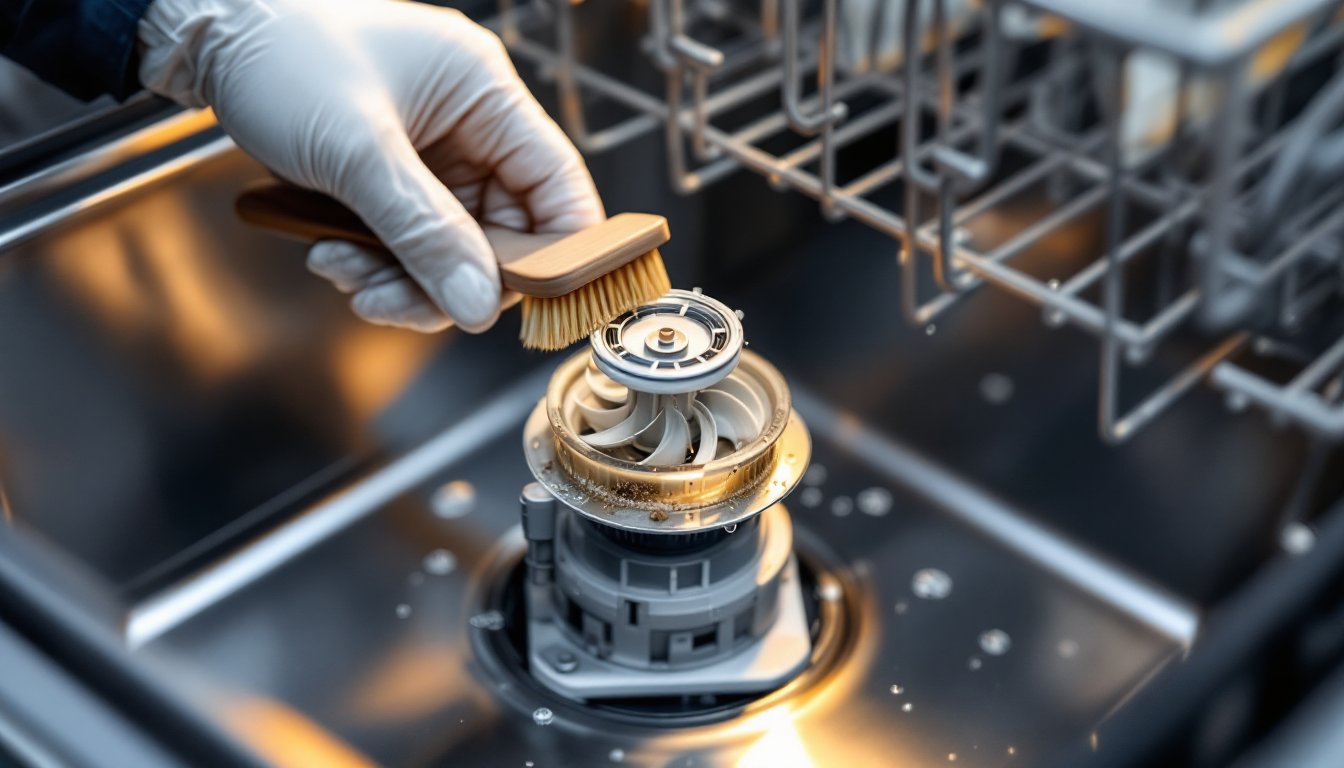
Carefully pull out the screen or basket. Rinse it under hot water and use an old toothbrush to scrub away buildup. If you see mineral deposits (white, crusty residue), soak the screen in equal parts white vinegar and water for 20 minutes, then scrub again.
Step 4: Check the Pump Inlet
With the screen out, shine a flashlight into the pump chamber. Look for visible food debris, hair, or other objects blocking the impeller. Use needle-nose pliers or a stiff wire to carefully remove any obstruction. Do not force anything or poke aggressively, the impeller is made of soft plastic and breaks easily.
Step 5: Reassemble and Test
Replace the screen and cover, reinstall the lower rack, and run a short cycle with no dishes. Listen for normal pump sound and check for drainage. If water still sits, the problem likely isn’t debris.
Clean your pump screen monthly to prevent buildup. This simple habit extends pump life significantly.
When To Call A Professional Repair Service
If the pump screen is clean but water still doesn’t drain, the pump motor or impeller has failed and needs replacement. This is where you’ll want to decide: DIY or professional repair?
Call a professional if: You’re uncomfortable working inside the dishwasher, your model is still under warranty, or you lack basic hand tools. A technician can diagnose the issue in minutes, order the correct pump for your exact model, and handle the repair in an hour or two. Repair costs typically range from $300 to $500 (including parts and labor), depending on your region and dishwasher brand. This is often half the cost of a new dishwasher, making repair the smarter choice for a machine that’s otherwise functioning well.
DIY makes sense if: You’re mechanically comfortable, have a service manual or YouTube tutorial specific to your model, and enjoy the challenge. A replacement pump costs $50 to $150, depending on the brand and model. You’ll save the labor fee, but you’ll invest an hour or more of your time. Even then, common mistakes, installing the pump backward, forgetting a gasket, or not seating the impeller fully, can cost you a second service call. Always order the exact OEM (original equipment manufacturer) part for your dishwasher model number: universal pumps rarely fit right.
Replacing Your Dishwasher Drain Pump: A DIY Overview
If you decide to tackle pump replacement yourself, here’s the roadmap. Every dishwasher layout is slightly different, so obtain your model number (usually on a label inside the door edge) and pull up your machine’s service manual or a trusted DIY guide like the step-by-step pump replacement tutorial before you start.
Tools and Materials You’ll Need:
- Phillips and flathead screwdrivers
- Adjustable wrench
- Needle-nose pliers
- Replacement drain pump (OEM part for your model)
- New gasket or pump seal (usually included with the pump)
- Small bucket or towels (water may still be in the tub)
- Work gloves and safety glasses
High-Level Steps:
- Disconnect power at the breaker and ensure water lines are shut off.
- Remove the lower spray arm and rack to access the pump area.
- Disconnect the drain hose from the pump outlet. Have towels ready, water may still be inside.
- Unbolt the pump from the tub floor. This usually requires two to four screws or clips.
- Disconnect the electrical connector from the pump motor.
- Install the new pump by reversing these steps. Ensure the gasket is seated and the impeller spins freely before closing everything up.
- Reconnect the drain hose, refill the dishwasher with water, and run a test cycle.
If common dishwasher drainage issues persist after your replacement, a wiring or control board problem may be at play, time to call the pro. Many DIYers underestimate how long this job takes: budget two to three hours your first time, especially if you hit snags. Rushing leads to mistakes like forgetting to reconnect a hose or installing the gasket incorrectly, which defeats the purpose of doing it yourself.