Table of Contents
ToggleA quality upholstered office chair is one of those home workspace investments that pays dividends every single day. If you’re spending eight hours a week, or more, sitting while you work, type, or manage projects, the difference between a worn-out hand-me-down and a properly designed upholstered office chair becomes immediately obvious in your back, neck, and overall productivity. The right chair isn’t just about comfort: it’s about supporting good posture, reducing fatigue, and creating a workspace you actually want to spend time in. This guide walks you through what matters most when choosing an upholstered office chair, from ergonomic fundamentals to matching your décor and setting a realistic budget.
Key Takeaways
- A quality upholstered office chair reduces back strain, neck pain, and fatigue while improving focus and productivity during long work sessions.
- Prioritize adjustable lumbar support, proper seat height, and armrest alignment to maintain correct posture and prevent shoulder and wrist tension.
- Choose fabric based on lifestyle: polyester blends offer affordability and durability, while leather and technical fabrics provide premium options for specific needs.
- Neutral colors like charcoal and gray maximize versatility and hide wear, while bolder hues work as statement pieces in minimalist office décors.
- The $300–$600 price range offers the best value for most home offices, with adjustable features, decent materials, and 2–3 year warranties supporting 4–5 years of comfortable use.
- Always test an upholstered office chair in person when possible and confirm at least a 30-day return policy before committing to your purchase.
Why Upholstered Office Chairs Matter for Your Home Office
Your home office chair does more work than you might think. Unlike dining chairs you sit in for thirty minutes, an office chair supports you through focused work sessions, video calls, and long stretches of concentration. An upholstered office chair with wheels rolls smoothly between your desk, printer, and storage without scuffing floors, while the fabric cushioning absorbs pressure on your tailbone and thighs, areas that take real abuse during an eight-hour workday.
Bad chair ergonomics lead to lower back strain, shoulder tension, and the kind of neck pain that creeps up by Friday afternoon. A well-designed upholstered office chair aligns your spine, distributes weight evenly, and lets you adjust height and support to match your body and desk setup. Beyond physical comfort, having a dedicated, comfortable chair signals to your brain that this is a real workspace, not a folding chair borrowed from the kitchen. That psychological shift affects focus and output more than people admit.
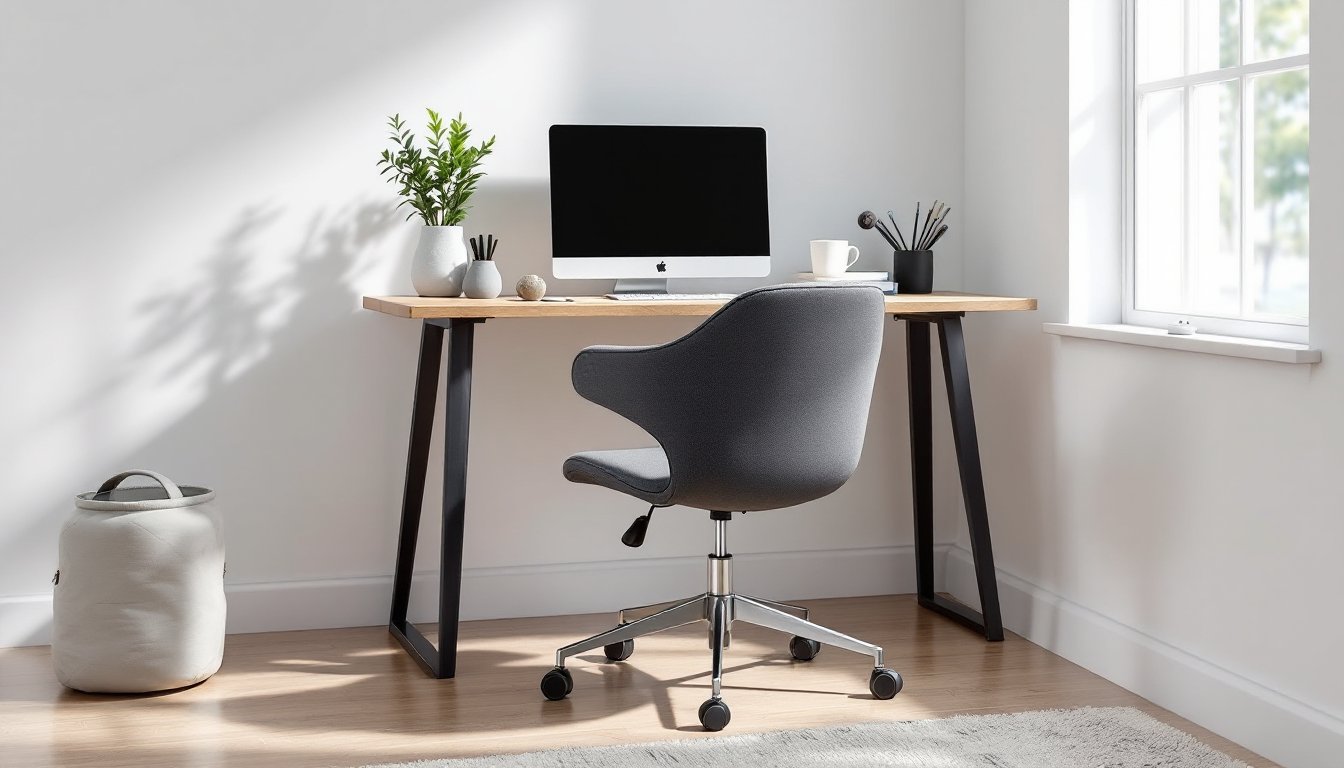
Home office chairs also define your room’s atmosphere. A lumpy, stained, or obviously cheap chair undercuts even the best desk setup and wall paint. An upholstered office chair with wheels in a cohesive color or pattern makes the entire area feel intentional and professional, whether clients visit or it’s just you and your coffee.
Key Features to Look for in an Upholstered Office Chair
When you’re evaluating options, a few specific features separate chairs that last from ones that fall apart in two years.
Lumbar Support and Ergonomics
Lumbar support is non-negotiable. Your lower spine (lumbar region) curves inward naturally, and a chair that flattens or exaggerates that curve will hurt. Look for chairs with adjustable lumbar support, a cushion or mechanism you can move up, down, or firm up to match your spine’s contour. If lumbar adjustment isn’t available, at least make sure the backrest has a gentle curve that doesn’t push you forward like a saddle.
Seat height should adjust smoothly, ideally with a pneumatic cylinder that lets you raise or lower it while seated. Your feet should rest flat on the floor (or footrest) with your knees at roughly 90 degrees. Armrests should align with your forearms when your shoulders are relaxed: too high or too low creates shoulder tension over hours. Some people skip armrests to save money, but properly positioned armrests reduce wrist and shoulder strain significantly.
Seat depth also matters. A seat that’s too deep pushes the back of your knees into the edge, cutting off circulation. Most office chair seats run 16 to 18 inches deep, standard for adult proportions, but test one if you’re petite or very tall.
Fabric Quality and Maintenance
Upholstery fabric for office chairs typically falls into three categories: polyester blends (affordable, durable, easy to clean), genuine leather (premium, professional, requires conditioning), and mesh or technical fabrics (breathable, modern, varying durability). Polyester blends are the workhorse for DIY home offices, they resist stains, don’t fade quickly under window light, and cost 30-50% less than leather.
Check the fabric’s weight in ounces per square yard: heavier fabric (above 12 ounces) holds up better to daily use and resists pilling. If you eat lunch at your desk or have kids or pets in the home office, look for stain-resistant treatments applied during manufacturing, brands like Sunbrella and similar technical textiles are worth the premium. A fabric that sheds lint or tears easily isn’t saving money: it’s creating headaches six months in.
The base and casters (wheels) matter just as much as fabric. A five-point base (five wheels radiating from the center) is more stable than four-point, especially if you lean back. Casters should be rated for your floor type: hard flooring needs soft rubber wheels that won’t scratch, while carpet works fine with standard plastic. High-quality gas cylinders hold height adjustment without creeping down over weeks, cheap ones fail within a year.
Design Styles and How to Match Your Décor
An upholstered office chair sits in your visual field for hours, so it should feel intentional rather than like an afterthought. Your choice of color, pattern, and style shapes how the entire workspace reads.
Neutral upholstered chairs, charcoal, gray, black, or soft tan, integrate into virtually any room and hide wear well. They work in minimal Scandinavian spaces, traditional studies, and contemporary offices. If you’re unsure about commitment or plan to redecorate, neutral is the safe play.
Bolder fabrics work if the rest of your office is restrained. A teal or deep blue upholstered office chair becomes a statement piece if your walls are white and shelving is simple wood. Patterned fabric (small geometric, subtle herringbone, or tone-on-tone textures) adds visual interest without feeling chaotic. A stripe or check pattern can echo colors in artwork or a rug, creating cohesion. Just avoid anything trendy that’ll feel dated in 18 months, a classic weave or solid color in a current hue ages better than a wildly patterned fabric.
Leg and base finishes matter too. Black or brushed steel bases feel contemporary and industrial. Natural wood or walnut finishes suit traditional or mid-century spaces. Chrome or polished metal leans modern. Most brands offer a choice, so align the base material with your desk legs or shelving hardware. Resources like interior design trends on Homedit show how professional designers layer furniture, and Houzz’s office chair selection displays real room photos pairing chairs with décor. Elle Decor also features designer offices where every piece, including the chair, works within a cohesive palette.
Setting a Budget Without Compromising Quality
Upholstered office chairs range from $150 to $1,500+. The gap between budget and premium reflects materials, longevity, and warranty, not always comfort.
In the $150-$300 range, you’ll find basic upholstered office chairs with basic adjustability. These work for part-time home offices or guest spaces, but don’t expect Herman Miller build quality or a five-year warranty. Fabric is typically thinner polyester: the lumbar support is fixed (not adjustable): casters are standard plastic. If you’re testing whether a home office setup works before committing larger funds, this tier makes sense.
The $300-$600 sweet spot is where most DIYers land. Chairs here offer adjustable lumbar support, decent fabric, smooth height and tilt mechanisms, and reasonable warranties (2-3 years). They’ll comfortably last 4-5 years with normal use. Many well-reviewed office chairs sold by mainstream furniture retailers sit here.
Above $600, you’re paying for premium materials, extended warranties (5-10 years), higher weight capacity, and potentially customization options. Brands like Herman Miller and Steelcase engineer for decades of heavy use in corporate settings. If you work from home full-time and budget allows, this investment pays off in longevity alone.
Before buying, test the chair in person if possible, or confirm the return policy covers at least 30 days. Online reviews often mention how a chair feels after six months, not day one. Check warranty terms carefully: some cover parts only, others include labor. A cheaper chair that fails in two years isn’t a bargain: a mid-range chair with a solid warranty and consistent user reviews typically wins the value math.
Conclusion
Choosing the right upholstered office chair comes down to matching ergonomic needs, fabric durability, design fit, and honest budget. Take time testing options, reading reviews, and imagining the chair in your space before purchasing. A chair that supports your body, looks right in your room, and holds up over years transforms how you work and feel about your home office. The investment pays itself back daily.