Table of Contents
ToggleA mid century bathroom vanity brings clean lines, functional elegance, and retro charm into your bathroom without feeling dated. Whether you’re renovating a full bath or refreshing an existing vanity, this style balances minimalist aesthetics with genuine craftsmanship. The appeal isn’t just nostalgic, mid century design prioritizes smart storage, durable materials, and proportions that work in modern homes. This guide walks you through finding, choosing, and installing a mid century vanity that complements your space and stands the test of time.
Key Takeaways
- A mid century bathroom vanity combines clean lines and functional elegance with tapered legs and minimal ornamentation, making it a timeless choice that enhances both vintage and contemporary bathrooms.
- Popular materials for mid century vanities include walnut, teak, and lighter woods like oak and maple, with authentic pieces featuring lacquer finishes, waterfall edges, and proportions typically ranging from 30 to 48 inches wide.
- Verify your bathroom’s plumbing rough-in measurements before selecting a mid century vanity to ensure proper fit and avoid costly modifications.
- Reproduction mid century vanities offer an affordable way to achieve authentic period aesthetics ($400–$1,200), while vintage pieces provide genuine craftsmanship but may require refinishing and come with steeper price tags.
- Proper installation requires securing the vanity to wall studs with shims for level alignment, and styling should remain minimal with brushed brass or oil-rubbed bronze hardware to respect the era’s design principles.
- Inspect vintage vanities carefully for water damage inside cabinets and drawer bottoms, and request measurements and documentation before purchasing to avoid structural issues and shipping hassles.
What Defines Mid Century Bathroom Vanity Style
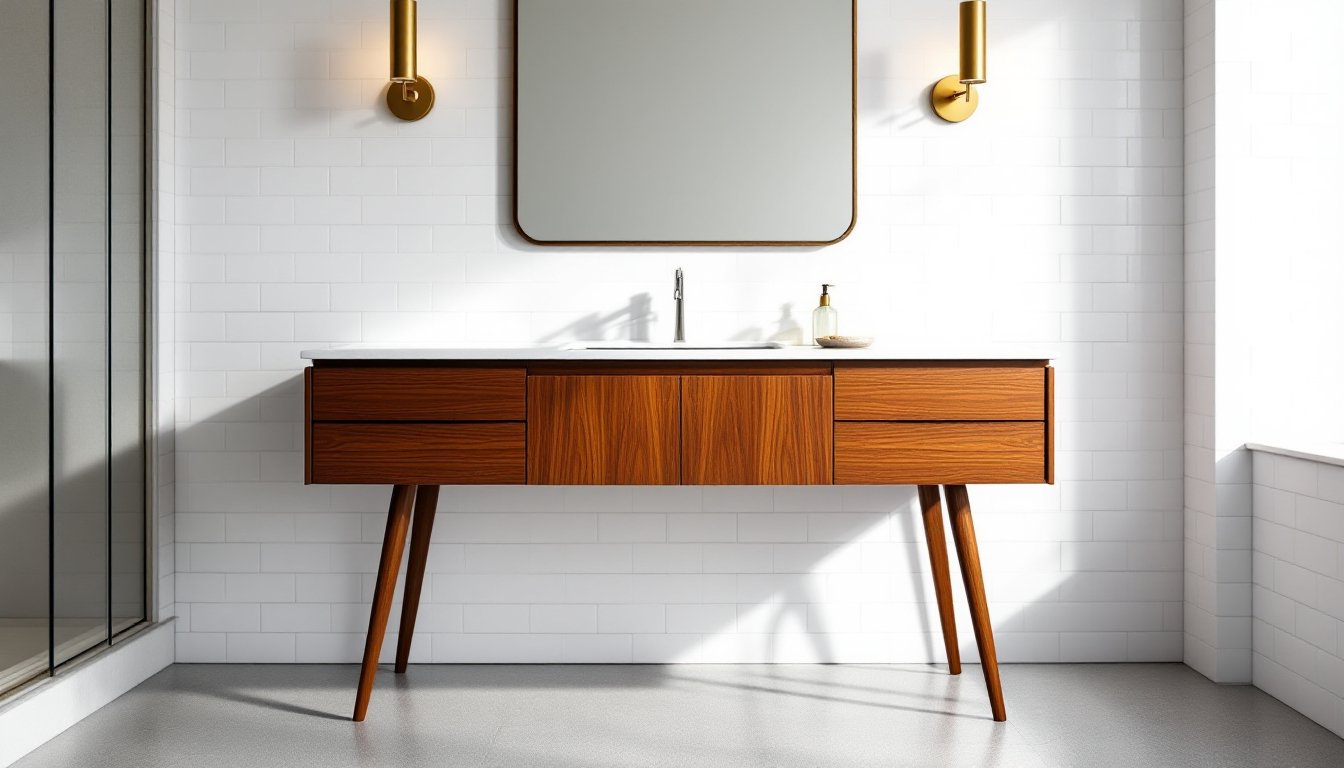
Mid century design emerged in the 1930s through the 1960s, emphasizing form following function. A mid century bathroom vanity isn’t just decorative, it’s engineered for usability. The hallmarks include tapered or splayed legs that expose floor space, making bathrooms feel less cramped. Tops are typically flat with minimal ornamentation, often in solid wood or a combination of wood and stone.
The style avoids ornate hardware and fussy detailing. Instead, pulls are simple, stainless steel, brushed brass, or even minimalist recessed handles. The overall look is uncluttered and purposeful, reflecting post-war modernism’s optimism about good design for everyday living. This philosophy makes mid century vanities work well in contemporary bathrooms: they don’t compete visually but rather enhance the space with understated sophistication.
Essential Design Elements and Materials
Popular Wood Types and Finishes
The foundation of a mid century vanity is solid wood or quality plywood construction. Walnut is the classic choice, its rich chocolate tones and grain pattern epitomize the era. It’s durable and takes finish beautifully, though it’s pricier. Teak was also popular and offers superior water resistance, making it ideal for bathrooms, but sourcing sustainable teak requires care.
Oak, maple, and birch are lighter, more affordable alternatives that still deliver the mid century aesthetic when finished properly. The finish matters as much as the wood. Lacquer finishes were standard in the era and give that glossy, sophisticated appearance: they’re harder but require professional application. Stains and varnishes are more DIY-friendly and still deliver authentic looks in natural, honey, or darker tones.
Vanity tops are typically laminate, formica, or solid surface materials that mimic stone or wood. Authentic mid century pieces used ceramic tile, butcher block, or slim marble slabs. A waterfall edge (where the countertop material wraps down the front) is a hallmark detail. Backsplashes are usually minimal or absent, keeping sightlines clean. Expect dimensions around 30 to 48 inches wide with 21 to 24 inches of counter depth, practical proportions that fit standard rough-in plumbing without forcing deep sprawl.
The sink basin in mid century vanities is often an undercounter or integrated design, sometimes paired with a single or double faucet setup with minimalist lines. Chrome or brushed metal finishes on fittings align with the era’s modernist aesthetic.
How to Choose the Right Mid Century Vanity for Your Space
Start by measuring your bathroom and checking the plumbing rough-in, the distance from the wall to the center of the drain and supply lines. Standard rough-in is 4 inches for supplies and 4 inches for drain, but verify yours before ordering. A 30-inch vanity suits compact bathrooms and powder rooms: 36 to 48 inches works for master baths and two-sink setups.
Consider your bathroom’s existing fixtures and color palette. If you have chrome or stainless hardware, choose a vanity with matching metal finishes. If your walls lean modern or minimalist, a walnut vanity with clean-lined pulls will anchor the room. If the space is smaller, lighter woods like blonde oak or maple make it feel more open.
Authenticity versus budget is a real trade-off. Vintage mid century pieces from estate sales or specialized dealers offer genuine materials and craftsmanship but may need refinishing or plumbing updates, which adds cost and labor. Reproduction vanities hit the aesthetic sweet spot, new construction with period-correct proportions and finishes, and come ready to install. Mid-range reproductions run $400 to $1,200: authentic vintage starts around $500 and climbs steeply for rare pieces.
Decide whether you want a vanity with a built-in backsplash and side panels, or a simple cabinet with open legs. Open-leg designs feel lighter and are easier to clean around: full enclosures provide more countertop space and concealed plumbing but can feel bulkier in smaller bathrooms.
Where to Find Authentic and Quality Mid Century Vanities
Online marketplaces like Wayfair, West Elm, and Article stock modern reproductions with authentic mid century details. Prices are transparent, and return policies are usually lenient. Review photos carefully for wood type, finish, and dimensions.
Specialty retailers focusing on retro or mid century furniture often offer curated selections. Design platforms like Houzz let you browse thousands of bathroom projects and connect with contractors who specialize in period-appropriate renovations. Luxury design publications such as Elle Decor feature high-end mid century pieces and designer recommendations, though prices reflect that tier.
Local options include estate sales, vintage furniture shops, and architectural salvage yards. You’ll find genuine pieces at lower prices, but you’ll need to inspect for water damage, verify dimensions, and factor in refinishing if needed. Remodeling websites occasionally showcase real projects: platforms like Remodelista document detailed renovations including custom vanity builds that offer inspiration for custom orders.
If buying vintage, ask about the vanity’s history with water and humidity. Check inside cabinets and drawer bottoms for soft spots, discoloration, or mold, signs of water damage that can weaken the structure. Request measurements and photo documentation before committing to shipping.
Installing and Styling Your Mid Century Bathroom Vanity
Installation requires shutting off water supply, disconnecting drain and supply lines, and removing the old vanity. If installing a new unit, check that the wall is plumb and studs are sound. Most vanities mount to studs using 2.5-inch wood screws through the back cabinet into wall framing. Use shims between the cabinet and wall to ensure level (check with a spirit level along the front edge and side). Out-of-level vanities cause water to pool and doors to swing open or closed on their own.
Disconnect plumbing only after confirming water is off and lines are drained. Use an adjustable wrench for supply line nuts and a P-trap wrench for drain connections. Pre-drill holes for mounting brackets if they’re needed: mark stud locations first. Once the vanity is secured, reconnect the drain and supply lines, hand-tightening nuts and then finishing with a wrench. Turn water back on slowly and check for leaks under the sink before closing up the cabinet.
Styling should enhance, not clutter. Keep countertops clear except for a single soap dispenser and perhaps one decorative object, a small vase or vintage soap dish that echoes the era. Wall-mount or small freestanding storage above the vanity preserves the open-leg aesthetic. Lighting is crucial: sconces flanking a mirror or a single centered fixture with a warm finish complements the wood and metal without overwhelming the space. A simple mirror with a wood or metal frame reinforces the period look. Avoid contemporary chrome or glass accessories: seek brushed brass, oil-rubbed bronze, or stainless finishes that align with mid century metalwork.
Conclusion
A mid century bathroom vanity is an investment in durability and timeless style. Whether you source a vintage gem or choose a well-made reproduction, the key is respecting the design’s core principles, clean lines, quality materials, and functional elegance. Proper installation and thoughtful styling will ensure your vanity looks great for decades and enhances your home’s character and value.