Table of Contents
ToggleYour Whirlpool refrigerator works hard to keep your food fresh, but only when the temperature settings are dialed in correctly. Many homeowners adjust their fridge temperature once and forget about it, or worse, fiddle with the controls without understanding what they’re actually doing. Getting Whirlpool refrigerator temperature control right isn’t complicated, but it does matter. Too warm, and you risk food spoilage and foodborne illness. Too cold, and you’ll waste energy while potentially freezing fresh produce. This guide walks you through understanding your temperature controls, setting them properly, and fixing common issues so your refrigerator runs at peak efficiency.
Key Takeaways
- Whirlpool refrigerator temperature control requires setting the fridge between 35°F and 38°F and the freezer at 0°F or below to meet USDA food safety standards and prevent spoilage.
- Use an appliance thermometer to verify actual temperatures after placing your Whirlpool refrigerator settings in the middle range, then wait 24 hours before making adjustments to allow the temperature to stabilize.
- Most temperature issues stem from simple problems like faulty door seals, blocked vents, or dusty condenser coils—cleaning these components can resolve temperature swings without professional service.
- Adjust Whirlpool refrigerator temperature controls gradually in small increments, as each notch typically changes temperature by 2–3°F, and avoid making multiple large adjustments in succession.
- Regular maintenance including seasonal adjustments, checking door gaskets, and vacuuming condenser coils every six months keeps your refrigerator running efficiently and maintains consistent food safety temperatures.
Understanding Whirlpool Temperature Control Basics
Whirlpool refrigerators use either a mechanical thermostat or a digital control panel to regulate temperature, depending on the model year and series. The mechanical systems rely on a simple dial or lever that opens and closes a damper controlling airflow from the freezer to the fridge compartment. Digital systems give you more precision and often include separate controls for the refrigerator and freezer sections.
Here’s what matters: your fridge compartment should hold between 35°F and 38°F, while the freezer should sit at 0°F or below. These aren’t arbitrary numbers, they’re the USDA’s food safety standards. Below 40°F in the fridge, most bacteria slow their growth significantly. At 0°F in the freezer, bacteria and pathogens essentially go dormant, allowing food to stay safe for months.
Whirlpool refrigerators often feature a feature called “adaptive defrost,” which adjusts defrost cycles based on usage patterns. Some newer models also include humidity-controlled drawers that let you fine-tune moisture levels for produce and meats. Understanding whether your model has these features helps you use temperature settings more effectively. Check your user manual or look up your model number online to see what controls you’re working with.
How to Set the Ideal Refrigerator Temperature
Locating Your Temperature Control Panel
Whirlpool refrigerator settings vary by model. Some units have controls inside the fridge compartment on the wall, others on the freezer wall, and newer models feature digital displays on the exterior or interior door. Look for a dial labeled 1–9, 1–7, or actual temperature numbers (35°F–38°F for fridge, 0°F for freezer).
For mechanical controls, the dial typically sits on the inside wall near the top. Numbers don’t represent degrees, they’re just settings that increase cooling intensity. “1” is the coldest, and the highest number is the warmest. If your Whirlpool refrigerator double door model has dual zones, expect separate controls for each section. Digital panels are easier: they usually display the current temperature and let you adjust with buttons or a touchscreen.
On models without visible controls, check the door itself, some manufacturers put them behind a small access panel or on the exterior side wall. Your model number (usually on a sticker inside the fridge) makes finding the exact location quick online.
Recommended Temperature Settings
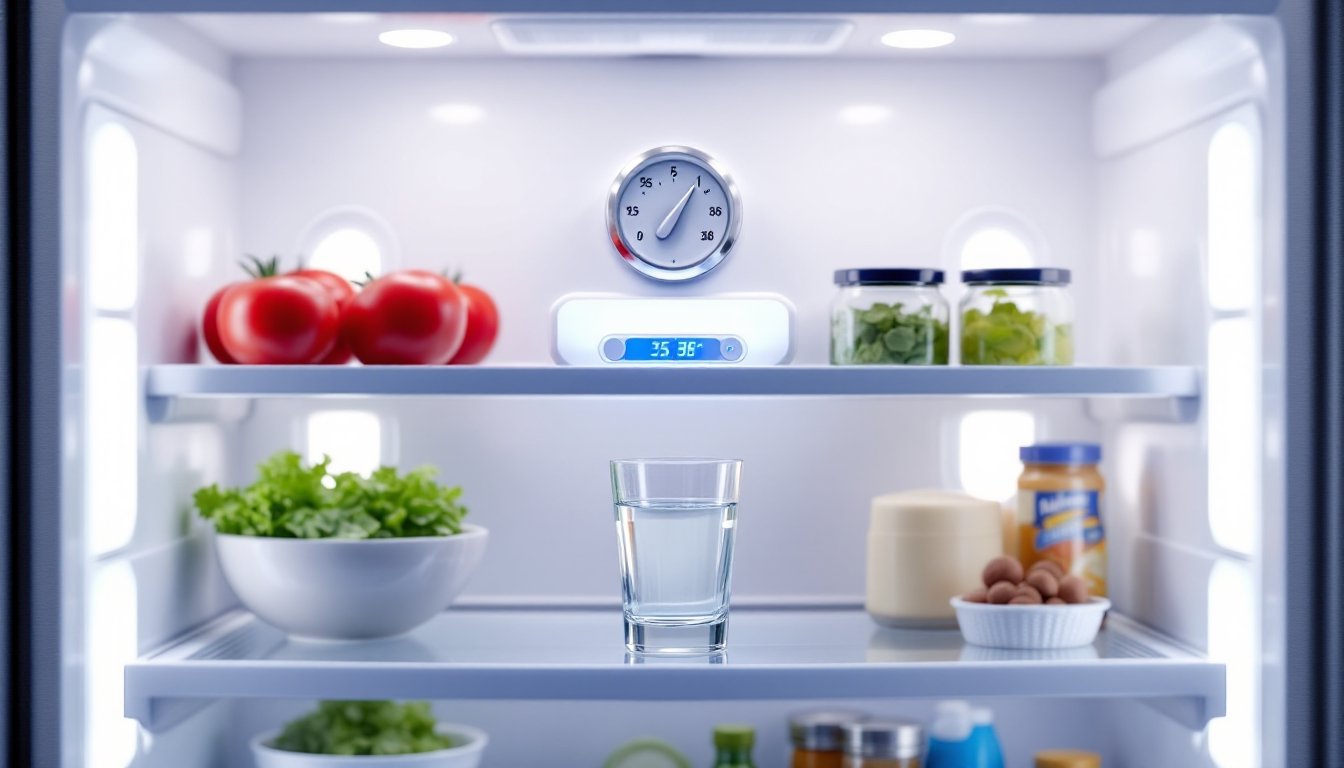
Start with the middle setting (around 4 or 5 on a numbered dial). This puts most Whirlpool refrigerators in the safe zone. Let it run for 24 hours, the temperature won’t stabilize faster, then use an appliance thermometer to check the actual temperature. Place the thermometer in a glass of water in the center of the fridge, away from the back wall where it’s coldest.
If your reading is between 35°F and 38°F, you’re good. Below 35°F? Lower the setting. Above 38°F? Raise it. For a Whirlpool refrigerator temperature setting, each notch usually changes the temperature by 2–3°F, so adjust gradually. Many homeowners make the mistake of turning the dial all the way and expecting instant results, give each adjustment a full day to settle.
For freezers, the target is 0°F or colder. The same principle applies: measure with a freezer thermometer, adjust in small increments, and wait 24 hours between changes. If your Whirlpool refrigerator settings include separate controls for each zone, treat them independently. A common setup has the fridge at 37°F and freezer at 0°F, but your specific model may vary slightly.
Seasonal adjustments help too. Kitchens get warmer in summer, so you might bump up the cooling setting slightly (remember: higher number = colder in mechanical systems). In winter, if your kitchen’s cool, you may dial it back. Keep an appliance thermometer in your fridge year-round if you live in a climate with big temperature swings.
Troubleshooting Common Temperature Problems
If your Whirlpool refrigerator temperature won’t hold steady, don’t assume the unit is broken. Start with the simple stuff. First, check that the door seals completely. A gap lets warm air leak in constantly, forcing the compressor to work harder and leaving your fridge warmer. Run your hand around the gasket, it should feel snug and slightly tacky. If it’s hard, cracked, or loose, replacement gaskets are inexpensive and easy to swap.
Second, make sure nothing’s blocking airflow inside. In many Whirlpool models, vents in the fridge compartment direct cold air from the freezer. If food or a misplaced container covers these vents, the fridge won’t cool evenly. Move items away from the back wall and check for ice buildup around the vents. A small amount is normal: large chunks indicate a defrost drain clog, which a service technician should clear.
Third, clean the condenser coils. Dust buildup makes the compressor work overtime and can cause temperature swings. These coils sit behind a panel at the bottom of the unit (front or back, depending on model). Unplug the fridge, remove the panel, and gently vacuum the coils with a soft brush attachment. Restrict the vacuum nozzle so you don’t damage the coils. Do this every six months for best performance.
If the temperature still drifts, the thermostat control may have failed. Digital controls are usually not field-serviceable: a technician will need to replace the board. Mechanical thermostats can sometimes be adjusted by a pro, but replacement is often cheaper. Before calling, check whether food is actually spoiling or if it’s just a sensor read issue, sometimes the display is wrong but the fridge is working fine.
For temperature swings between 35°F and 42°F, that’s often normal if the door opens frequently or the room is warm. A fridge cycling between 37°F and 40°F keeps food safely cold. Only worry if you see consistent readings above 40°F or below 32°F (freezing mode). According to appliance reviews from Good Housekeeping, well-maintained refrigerators rarely have temperature issues if you follow these simple checks first.
If you’ve ruled out seals, vents, and coils, and your Whirlpool refrigerator settings don’t seem to respond to adjustments, the compressor or refrigerant line might be compromised. That requires professional service. Don’t try DIY refrigerant repairs, that’s a licensed job in most places due to environmental regulations.
Conclusion
Mastering Whirlpool refrigerator temperature control comes down to knowing your model, setting it right, and checking it occasionally. Use an appliance thermometer, adjust in small increments, and give changes time to settle. Keep the seals clean, the vents clear, and the coils dust-free. Most temperature complaints vanish once these basics are handled. Your fridge will keep food safer, run more efficiently, and last longer when you treat temperature settings as part of regular maintenance, not a mystery to ignore.