Table of Contents
ToggleA master bedroom should be a sanctuary, the one room in the house where comfort, function, and personal style converge. Yet many homeowners treat bedroom layout as an afterthought, pushing furniture against walls and hoping it works. The truth is, a well-planned master bedroom layout can dramatically improve sleep quality, make the space feel larger, and create room for the activities that matter to you, whether that’s reading, working, or simply unwinding. This guide walks you through proven layout strategies that balance aesthetics with practical flow, helping you maximize every square foot while maintaining the tranquility your bedroom deserves.
Key Takeaways
- A master bedroom layout should balance aesthetics, function, and flow—measure your space accurately and create a to-scale floor plan before moving furniture to prevent costly mistakes.
- The classic centered bed layout works well for most rooms, but floating your bed in larger spaces (12 × 14 feet or bigger) can create visual interest and intentional separation when paired with an area rug.
- Maintain clear pathways of at least 30 inches wide, position nightstands slightly lower than mattress height (24–28 inches), and ensure closet and doors open freely to maximize comfort and prevent a cramped feel.
- Layer three types of lighting—overhead, task, and ambient—using warm 2700K bulbs and dimmers to promote sleep quality and create a restful atmosphere.
- Optimize storage with under-bed rolling bins, wall-mounted shelving, and thoughtful dresser placement to reduce visual clutter and improve sleep quality.
- Position seating near windows or corners away from traffic flow, and prioritize the bed in narrow rooms by using a simple bench at the foot as a functional alternative to a full chair.
Assess Your Space and Measure Accurately
Before moving a single piece of furniture, grab a tape measure and a notepad. Measure your room’s length, width, and ceiling height. Note the location of windows, doors, closets, electrical outlets, and any architectural features like alcoves or sloped ceilings. These aren’t minor details, they dictate what layouts are actually feasible.
Draw a to-scale floor plan on graph paper or use a free tool like Floorplanner. Mark permanent fixtures, then sketch your bed, nightstands, dressers, and seating. This takes 20 minutes and prevents costly furniture-moving mistakes later. Pay attention to door swing, you don’t want the bedroom door hitting a nightstand or bench.
Measure your bed frame (queen is typically 60″ × 80″: king is 76″ × 80″) and allow at least 18–24 inches on each side for passage and nightstands. If your room is tight, even 12 inches works, though it feels cramped. Write down furniture dimensions, many homeowners guess and end up with a dresser that’s too large or a chair that dominates the space.
The Classic Centered Bed Layout
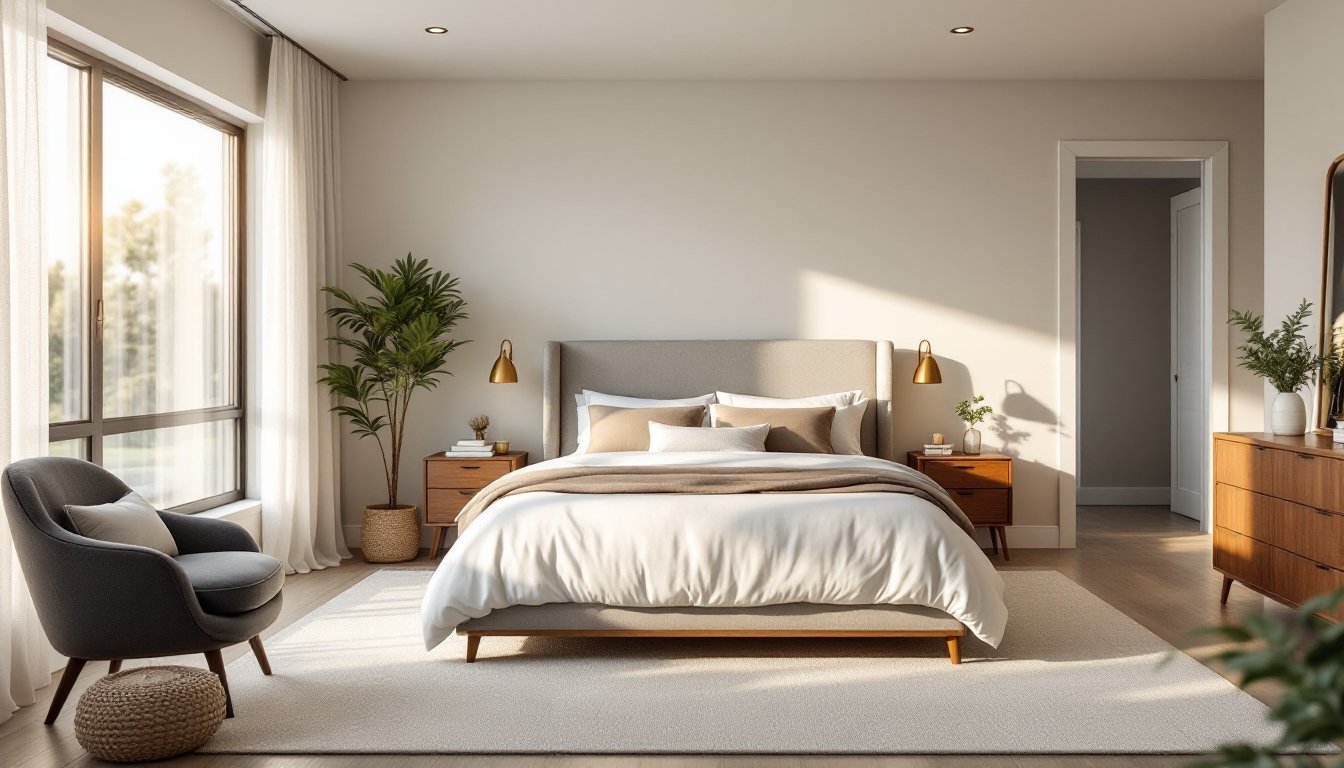
Centering your bed on the longest wall remains the most popular, and often the most practical, option. It anchors the room, creates symmetry, and works in spaces from compact to spacious. Place your bed so the headboard sits against the wall, leaving equal space on both sides. Flank it with matching nightstands (24–30″ wide is standard) and a table lamp on each side for balanced task lighting.
This layout works beautifully with a low-profile bed frame or a traditional upholstered headboard. Avoid tall, heavily carved headboards in rooms with 8-foot ceilings, they’ll feel oppressive. Keep nightstand drawers accessible: store daily items like books, glasses, and remotes within arm’s reach.
For smaller rooms, skip the nightstands and use narrow wall-mounted shelves instead. You’ll gain floor space while maintaining a tidier look. Position a low dresser or chest on the opposite wall, which grounds the far end of the room and prevents the layout from feeling disconnected.
Floating Your Bed for Visual Interest
Floating your bed away from the wall is trendier but requires careful planning. This works best in larger master bedrooms (12 × 14 feet or bigger) where you can pull the bed out at least 18 inches without creating awkward dead space. Use a bed frame with a finished back, a platform bed or a bed with an upholstered back panel, since you’ll see it from the foot of the bed.
Plant a narrow console table or bench behind the bed’s headboard to define the space and provide a surface for lamps or décor. Anchor the floating bed with a large area rug (8 × 10 feet minimum) that extends under the nightstands. Without a rug, the bed feels adrift: with one, it becomes a destination.
Floating layouts suit open-concept homes where the bedroom opens directly into a hallway or living area. The visual separation makes the bedroom feel intentional rather than cluttered. But, this approach sacrifices storage under the bed and can complicate vacuuming, so weigh those trade-offs before committing.
Furniture Placement and Flow Essentials
Flow is the unsung hero of bedroom layout. Your brain registers movement patterns before it registers décor, so a cluttered traffic pattern makes even a beautifully decorated room feel cramped and stressful. Identify the natural path from the bedroom door to the bathroom, closet, and windows. Furniture should never block this path, it should frame it.
In rectangular rooms, arrange furniture in parallel lines. Bed along one long wall, dresser along the opposite wall, and seating (if there’s room) perpendicular to both. In square rooms, you have more flexibility: consider angling furniture slightly to create visual interest and break up the boxy feel.
Nightstands should be slightly lower than mattress height (about 24–28 inches) for comfortable reaching. A dresser or chest is typically 30–36 inches tall and works well opposite the bed, creating a focal point when you’re lying down. Keep pathways at least 30 inches wide, 36 inches is more comfortable and feels less cramped.
Creating Adequate Walking Space
Adequate walking space separates a functional bedroom from one that feels congested. Beyond the main traffic path, ensure you can open closet doors fully without furniture blocking them. Test this during your floor-plan phase: a closed-off closet is infuriating every morning.
If you’re adding seating, a reading chair, accent chair, or small sectional, place it in a corner or near a window where it doesn’t interrupt flow. A 3 × 4-foot reading nook feels luxurious: a chair wedged into the only open corner feels accidental. Position seating to face the window or a feature wall, not the foot of the bed.
Narrow rooms (10 feet wide or less) rarely accommodate both a bed and separate seating without feeling cramped. In these cases, prioritize the bed and consider a simple bench at the foot as a compromise, it’s functional for dressing, decorative, and takes up far less visual weight than a full chair.
Storage Solutions and Closet Organization
Master bedroom comfort depends as much on hidden storage as it does on furniture arrangement. A cluttered bedroom makes sleep harder, even if you don’t consciously register why. Before layout decisions, audit your storage: closet, dresser, under-bed space, and wall-mounted shelves.
If your walk-in closet is separate (ideal), your layout isn’t constrained by closet access. If you have a single entry closet in the bedroom, position the bed so the closet door doesn’t swing toward the foot of the bed, it’ll feel like an interruption every time someone opens it. Position your dresser to provide an alternative storage focal point, reducing the visual weight of the closet door.
Under-bed storage is underrated in furniture layouts. Low-profile rolling bins fit under most beds (especially platform beds) and hold seasonal clothing, linens, or extra pillows. This keeps clutter off surfaces and off your mind. Measure your bed height before purchasing bins: queen and king beds with metal frames often sit 10–12 inches off the ground, while low platform beds sit only 6–8 inches up.
Wall-mounted shelving above the dresser adds visual height and storage without floor footprint. Two to three shelves look balanced: add styling with small storage baskets, books, and minimal décor. Interior design ideas from Homedit can inspire both functional and beautiful shelf styling that complements your bedroom layout.
Lighting and Ambiance for Your Master Suite
Lighting transforms a bedroom from purely functional to genuinely restful. Layer three types: overhead (for cleaning and finding items), task lighting (bedside and dressing), and ambient (soft for evening wind-down). An overhead fixture is convenient but avoid overhead-only lighting, it’s harsh at night and disrupts melatonin production.
Place table lamps on nightstands for reading and turning on/off easily from bed. Choose bulbs rated 2700K (warm white) rather than 4000K or higher: warm light promotes sleep. If you’re adding a dresser, position it near an outlet or run cord covers along the wall for vanity lighting.
Wall sconces flanking the bed’s headboard work well in smaller rooms where nightstands would crowd the space. They free up surface area, create balanced lighting, and look intentional. Make sure sconces are installed 30 inches above mattress height so light doesn’t glare in your eyes.
Consider dimmers on all bedroom lights, especially bedside lamps and overhead fixtures. Dimmers cost minimal extra during installation and dramatically improve sleep quality. MyDomaine’s interior design guides cover bedroom lighting strategies that enhance both function and relaxation, making it worth reviewing before finalizing your layout. Avoid blue-toned lighting after sunset: use warm tones or amber-hued bulbs in evening hours to support your circadian rhythm.