Table of Contents
ToggleIf you’ve noticed rust stains on your fixtures or red-tinged water coming from your taps, you’re dealing with iron in your water supply, a problem affecting roughly 12% of American households. Iron contamination isn’t just cosmetic: it can damage appliances, clog pipes, and create stubborn staining that’s a nightmare to clean. Many homeowners assume their water softener handles everything, but here’s the reality: a standard water softener for iron removal has real limits. Understanding how water softeners work with iron, whether a water softener will remove iron from your supply, and what systems actually excel at iron removal is essential before investing in a solution. This guide walks you through what’s happening in your pipes and what genuinely works.
Key Takeaways
- Standard water softeners cannot effectively remove iron because ferrous iron oxidizes inside the resin bed, permanently coating and damaging it without proper pre-treatment.
- Water softener iron removal requires either an oxidation filter ($500–$1,500) upstream or a specialized ion exchange system with manganese oxide coating ($1,500–$3,500) to prevent equipment damage.
- Iron levels above 0.3 mg/L cause visible rust stains on fixtures and appliances, and a water softener combined with iron removal protects your plumbing and extends appliance life significantly.
- Signs of iron fouling in your softener include orange or brown staining on fixtures, reduced water flow, rotten egg smells, and more frequent regeneration cycles that take longer than normal.
- Annual water testing and regular maintenance (backwashing oxidation filters every 1–2 weeks or automated regeneration for specialized systems) keep your iron removal system working reliably for 5–7 years.
Understanding Iron In Your Water Supply
Iron occurs naturally in groundwater and shows up in two forms: ferrous (dissolved iron) and ferric (oxidized iron particles). Ferrous iron dissolves completely in water, which is why it isn’t visible until it oxidizes and turns reddish-brown. This happens when water sits in pipes, appliances, or when it’s exposed to air after leaving your tap.
The source matters. Well water commonly carries higher iron concentrations because groundwater has more contact with iron-bearing rock and soil. Municipal supplies occasionally contain iron too, though treatment plants usually remove most of it. If your water turns red after sitting in a glass overnight, you’ve got ferrous iron. If it’s already rust-colored at the tap, you’re looking at ferric iron that’s already started oxidizing.
Iron levels above 0.3 mg/L begin causing visible staining. At 10 mg/L or higher, you’ll see discoloration on almost everything. Beyond the visual nuisance, iron feeds bacteria that create biofilm in pipes, restricts water flow, and ruins water heaters faster. That orange film you see in toilet tanks? That’s iron bacteria colonizing your plumbing.
Why Water Softeners Struggle With Iron
A standard water softener exchanges calcium and magnesium ions for sodium, which removes hardness minerals but doesn’t address iron. When ferrous iron passes through a typical ion exchange resin, the resin can’t distinguish it from hardness minerals, so some iron gets trapped in the bed. But here’s the problem: that trapped ferrous iron oxidizes inside the resin, turning to ferric form and coating the resin beads permanently.
This coating reduces the softener’s effectiveness, reduces water flow through the tank, and can’t be recovered with normal regeneration cycles. The resin becomes damaged, expensive to replace, and you’ll eventually need a new softener altogether. A water softener for iron removal needs special modifications or a separate stage before the softener kicks in.
Will a water softener remove iron on its own? Technically, it removes some ferrous iron by accident during normal operation, but not reliably and with serious side effects. If your water has both hardness and significant iron, relying on a standard softener alone will fail within a few years. You need either a water softener with iron removal pre-treatment or a dedicated iron removal system running first.
Types Of Water Softener Systems For Iron Removal
Ion Exchange Vs. Oxidation Methods
Two main approaches tackle iron before it reaches your softener: oxidation and ion exchange with special resins.
Oxidation systems inject air or ozone into water, converting dissolved ferrous iron into ferric particles that a mechanical filter catches. These systems work reliably on ferrous iron but require consistent maintenance, the filter media clogs with rust and needs backwashing every 1–2 weeks depending on iron concentration. Oxidizing filters don’t address hardness, so they pair with a standard softener downstream. The advantage is simplicity and low cost ($500–$1,500 installed). The downside is filter maintenance becomes routine, and they don’t handle iron bacteria as effectively.
Specialized ion exchange resins designed specifically for iron use a manganese oxide coating instead of standard polystyrene. This resin catalyzes iron oxidation inside the tank, trapping oxidized particles in the media. A whole-house iron water softener combining both functions eliminates the need for separate pre-treatment. These combination units cost more upfront ($1,500–$3,500 installed) but reduce maintenance and space requirements. They do require careful regeneration chemistry since the manganese coating demands specific mineral concentrations to function properly.
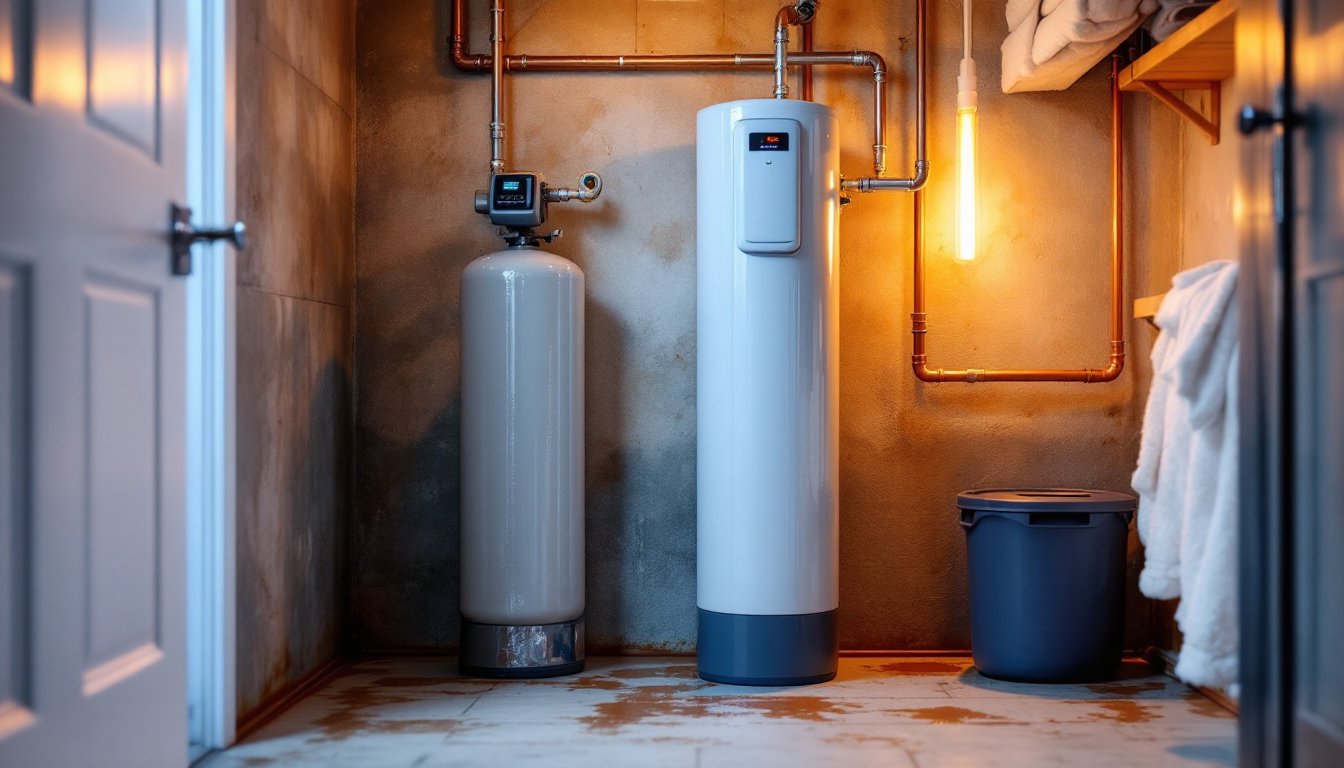
A third option, and increasingly popular among homeowners, combines a dedicated iron removal tank with a traditional softener in series. The iron removal system handles iron removal: the softener handles hardness downstream. This splits the workload and lets each system do what it does best. Will a water softener remove iron this way? Yes, because the upstream system removes iron before water enters the softener.
Signs Your Water Softener Needs Iron Treatment
Orange or brown staining on white fixtures, porcelain, or inside appliances is the obvious red flag. If you’re noticing this, iron concentration is likely above 0.5 mg/L. Look inside your toilet tank (use a white cloth to wipe the walls) or check the inside of your dishwasher spray arm for rust deposits.
A second indicator is reduced water flow or pressure throughout the house. If iron is coating your softener’s resin, flow rates drop noticeably. You might also smell rotten eggs (hydrogen sulfide) in cold water lines, which suggests iron bacteria have established colonies. That sulfur smell indicates biological iron, iron bacteria thriving in your pipes and water heater.
If your water softener requires regeneration more frequently than expected, or if regeneration cycles take much longer than normal, iron fouling is likely the culprit. Iron buildup restricts water movement through the resin bed, making each cycle sluggish. Some homeowners also report a metallic taste in water, though this is less common with ferrous iron and more typical of ferric iron or iron bacteria byproducts.
A home water test ($15–$50 from any hardware store) confirms iron levels. Test both hot and cold water, iron sometimes concentrates more in hot water systems. If levels exceed 0.3 mg/L and you’re using a standard softener without pre-treatment, it’s time to add an iron removal stage.
Installing And Maintaining An Iron Removal System
If you’re adding an oxidation filter ahead of an existing softener, the install is straightforward enough for a confident DIYer. You’ll need flexible hose barb connectors rated for your water pressure (typically 1/2-inch or 3/4-inch depending on your supply line diameter), a wrench set, and Teflon tape for threaded connections. Shut off the water main, depressurize the system by opening a tap, then attach the iron removal tank inline before water reaches your softener.
Be warned: this isn’t a light modification. You’re cutting into your main supply line, which means you need to know whether your plumbing is copper, PEX, or PVC and have the right fittings. One small leak floods your basement or crawl space. If plumbing work makes you uncomfortable, hire a plumber, typically $300–$600 in labor for a new tank install. Many systems also require a dedicated drain line to a floor drain or sump pump, so plan accordingly.
Maintenance hinges on your system type. Oxidation filters need backwashing (reversing water flow through the filter to clear trapped rust) every 1–2 weeks. Some newer models include automatic backwash valves on timers: others require manual backwashing via a bypass valve. Neglect this, and pressure drops to nearly zero. Specialized ion exchange systems need careful regeneration with salt or potassium chloride at precise intervals, often handled automatically by built-in controls.
Water testing annually confirms your system’s working. If orange staining returns or flow drops, the media is exhausted and needs replacing, typically $150–$300 depending on tank size. Hard water test strips from Good Housekeeping–recommended suppliers offer quick verification without lab fees. Track your system’s performance like you would any appliance, and it’ll serve 5–7 years reliably.
For complicated layouts or high iron concentrations (above 5 mg/L), consult a water treatment professional through local home service networks. They can design a multi-stage system tailored to your specific water chemistry and avoid costly mistakes.
Conclusion
Water softener iron removal isn’t handled by a standard softener alone, that’s the core takeaway. Will a water softener remove iron? Partially and harmfully. Iron-laden water damages softener resin quickly, shortening equipment life significantly. The right solution depends on your water chemistry: oxidation filters suit moderate iron levels and cost less, while specialized ion exchange resins handle higher concentrations with less maintenance. Test your water, size your system to actual iron load, and don’t skip installation prep. Done right, removing iron protects your softener, eliminates staining, and extends appliance life. It’s worth the upfront investment.